The trucks arrived before dawn, which is the only sensible time to move a giraffe. By the time the sun had cleared the West Nile horizon and begun burning the dew off the tall grass, the crates were open and four Rothschild's giraffes — Giraffa camelopardalis rothschildi, one of the most endangered giraffe subspecies on the continent — were picking their way across the red-earthed floodplain of Ajai Wildlife Reserve for the first time in living memory.
Ajai sits in northwestern Uganda, a largely overlooked reserve that spent decades overshadowed by the country's more visited parks. Poaching pressure during the instability of the 1970s and 80s stripped it of many of its large mammals. The giraffes that once browsed its acacia margins were gone. What remained was the land: open grassland threaded with seasonal wetlands, the Albert Nile close enough to send morning mist drifting through the palms.
Why Rothschild's Giraffes
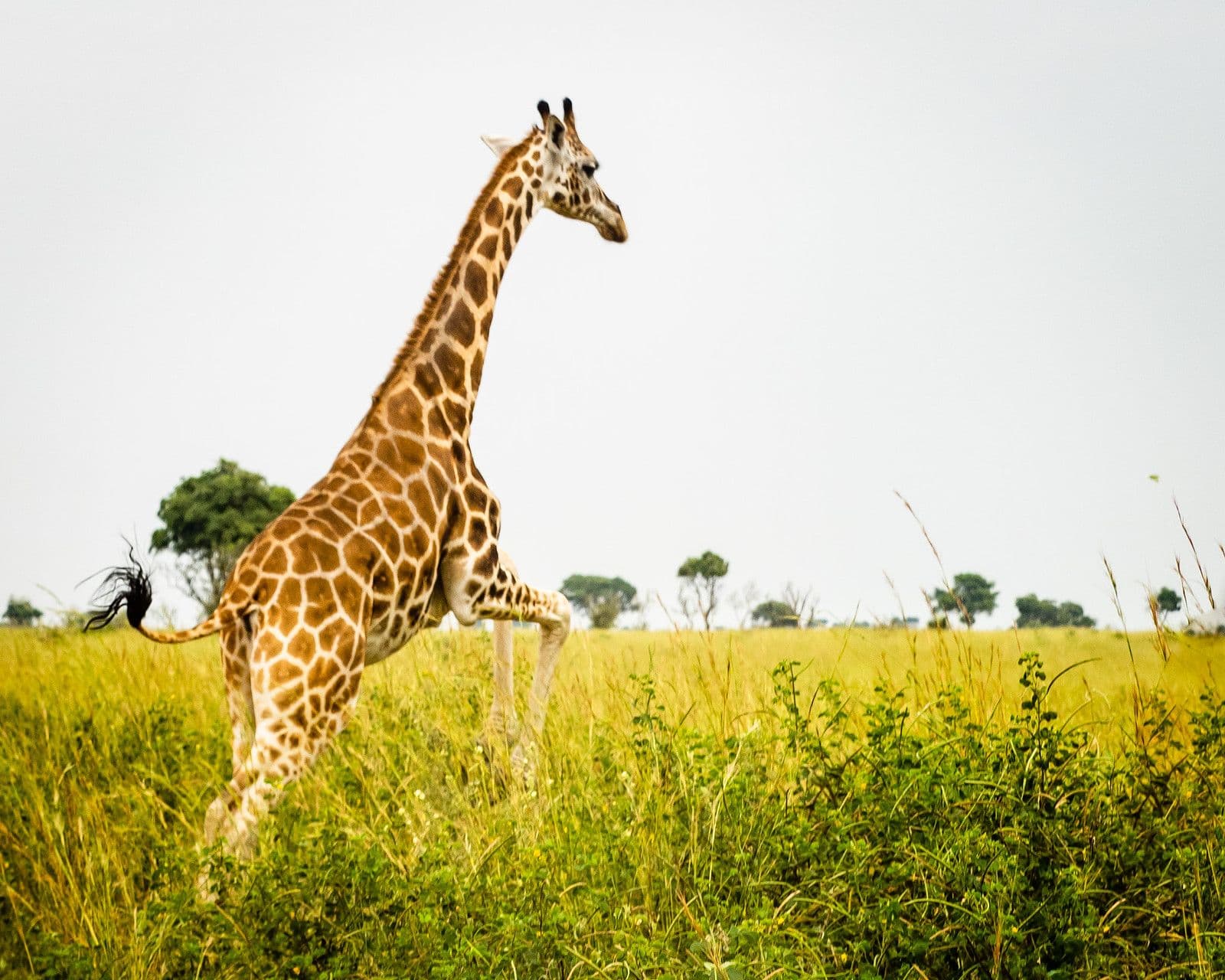
Of the roughly 117,000 giraffes estimated to remain across Africa, fewer than 2,700 are Rothschild's — a subspecies distinguished by its cream-white lower legs, which look as though they've been dipped in pale paint, and by the absence of markings below the knee. Uganda holds one of the subspecies' most important strongholds, centered on Murchison Falls National Park, where the population has grown steadily under sustained protection.
That growth made translocation possible. Wildlife authorities and conservation partners identified Ajai as a viable receiving site: the habitat is appropriate, a management presence has been rebuilt, and the reserve sits within a corridor that conservationists hope will eventually reconnect fragmented wildlife populations across the northern landscape.
The Move Itself
Translocating giraffe is not a small operation. The animals must be carefully immobilised in the field — a procedure that carries real risk for a species whose cardiovascular system is under constant pressure managing bloodflow to a head nearly two metres above the heart. Each animal travels in a purpose-built crate, oriented to keep the neck supported and the stress minimal. Veterinary teams monitor throughout.
Of the four animals moved in this first phase, three are female and one is male — a deliberate choice to give the founding group its best chance of establishing a breeding population. Rangers at Ajai will track the animals closely in the months ahead, watching how they move across the reserve, which trees they favour, and whether the grasses and acacia provide enough browse.
"You release them and then you watch," said one of the field team members as the last crate door swung open. "That first hour tells you a lot about whether the habitat will hold them."
What Comes Next
Ajai's giraffe reintroduction is one piece of a broader conservation picture across Uganda's north. Communities adjacent to the reserve have been involved in planning and monitoring, recognising that long-term survival of any large mammal population depends on the people who live alongside it having a reason to protect rather than compete with it.
For visitors travelling the northern circuit — combining Murchison Falls with the lesser-known reserves of the West Nile region — Ajai now offers something genuinely rare: the possibility of watching Rothschild's giraffes in a landscape almost entirely free of other tourist traffic. No other vehicles. Just the giraffes, the papyrus, and the particular stillness of a reserve finding its way back to itself.
Visiting the Region
Murchison Falls National Park remains the anchor for most northern Uganda itineraries, and rightly so — the Nile forcing itself through a 7-metre gap in the rock is one of those things that photographs cannot prepare you for. But Ajai's reopening to serious wildlife travel adds another reason to linger in the north rather than rushing south.
Our [5-day Murchison Falls safari with chimpanzee tracking and rhino trekking](5-days-murchison-falls-big-five-safari-chimpanzee-tracking-and-rhino-trekking-adventure) already pairs Murchison with Ziwa Rhino Sanctuary for a northern Uganda experience that covers ground most visitors miss entirely. We're watching the Ajai situation closely and expect to incorporate the reserve into select itineraries once access infrastructure is confirmed.
The giraffes are back in Ajai. That sentence would have seemed unlikely ten years ago. It shouldn't be taken lightly.