Most visitors to Bwindi come for the mountain gorillas. They arrive before dawn, lace up boots in the dark, and spend the morning pushing through Hagenia woodland until a ranger raises a hand and whispers. The gorillas get the permits, the photographs, the headlines. The chimpanzees — who share the same ancient canopy — mostly go unnoticed.
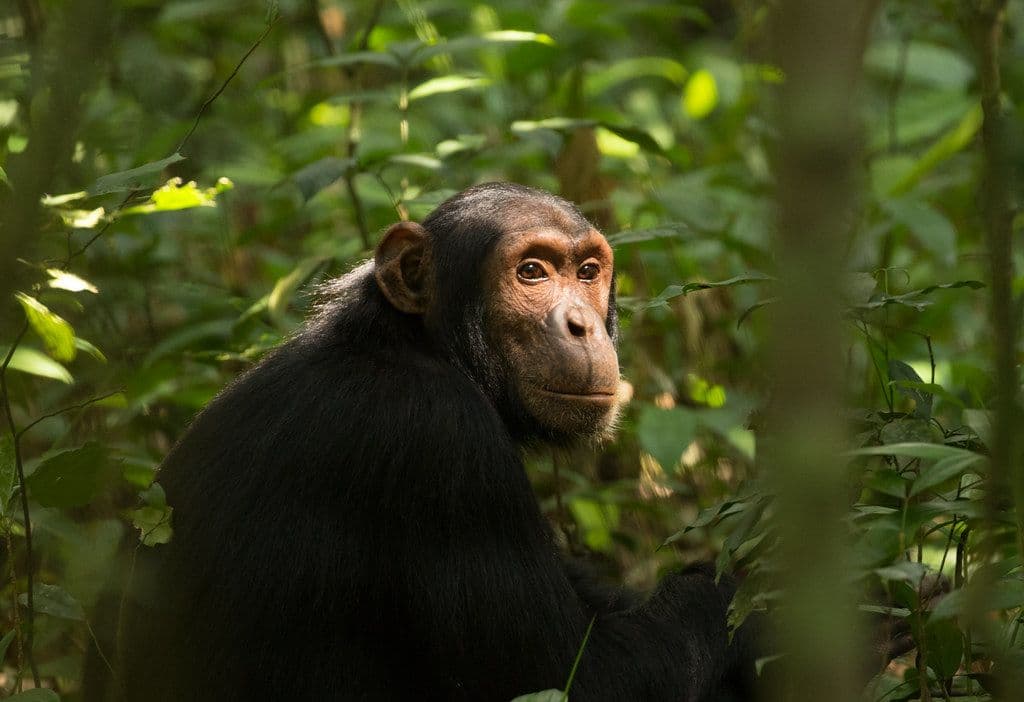
That is beginning to change. A census team working across Bwindi's four sectors finished fieldwork in late 2025, combining nest-count transects, acoustic monitoring, and direct observation to estimate the park's chimpanzee population with greater precision than any previous effort. The results, shared with the Uganda Wildlife Authority and conservation partners, suggest a community of several hundred individuals distributed unevenly across the forest — with the Rushaga and Nkuringo sectors in the south holding denser concentrations than the more heavily trekked northern areas around Buhoma.
Why Bwindi's Chimps Are Understudied
Bwindi covers roughly 331 square kilometres of montane and submontane forest, and most of it is steep, tangled, and genuinely difficult to move through. Census teams describe days when they covered less than two kilometres, stopped by ridgelines choked with strangler figs and ancient Prunus africana. For researchers used to the open woodlands of Kibale, Bwindi is a different proposition entirely.
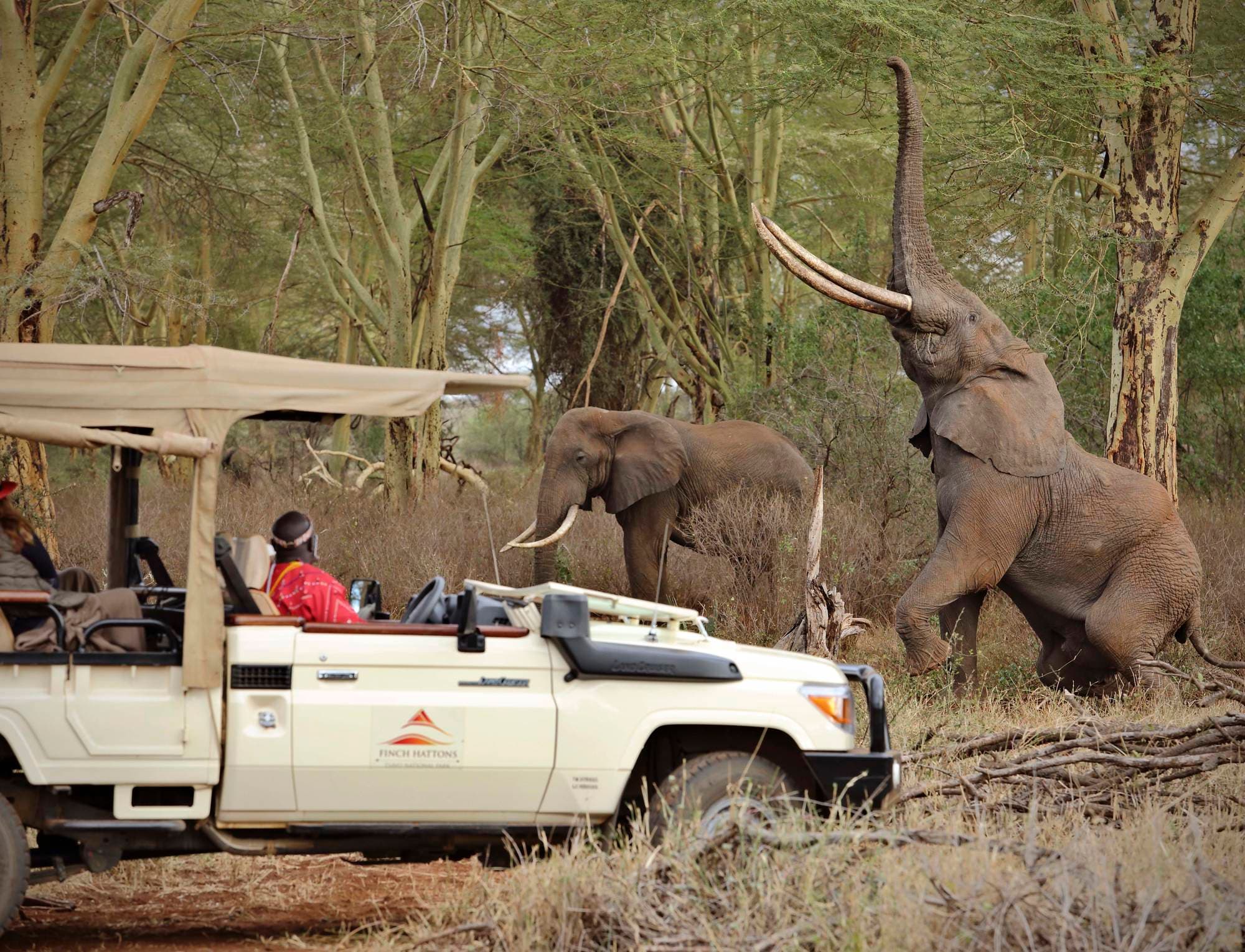
The forest's complexity is also what makes it so biodiverse. The same elevation gradient that slows a researcher's boots supports an extraordinary layering of habitat: chimpanzees work the mid-altitude fruit trees while olive baboons and black-and-white colobus move higher, and the forest floor belongs, at least at night, to forest elephants and bushpigs.
What the Counters Found
Acoustic recorders placed at thirty-two sites across the park captured chimpanzee calls — the long-distance pant-hoots that males use to announce their presence and coordinate movement. Combined with nest counts on twelve transect lines, the data allowed researchers to model territory use across the full park area for the first time.
The census team noted that edge zones near community land showed lower nest density, consistent with chimps avoiding areas of regular human activity. Interior forest, particularly old-growth stands with high fig-tree density, supported the most stable sub-communities. One team member, primate ecologist Dr. Amara Nalwoga, described the experience of sitting below a fig tree in the Nkuringo sector at first light: "You hear the forest wake up. Hornbills first, then the chimps — three males calling from different ridges, answering each other. You understand very quickly that this space belongs to them."
The Gorilla-Chimpanzee Overlap
One finding that surprised researchers was the degree to which gorilla and chimpanzee ranging areas overlap in the southern sectors. The two species are not in direct competition — gorillas are largely terrestrial folivores, chimps are arboreal frugivores — but their shared use of certain fruiting trees during peak seasons creates occasional, and apparently tense, proximity. Rangers working in the Rushaga area have observed both species at the same Ficus mucuso trees within a single morning, the gorillas on the ground below, chimps in the canopy above, each group aware of the other and choosing, most of the time, to simply carry on.
Conservation Implications
The census data will inform Bwindi's next management plan, particularly around buffer-zone policy and the placement of community tourism activities. One recommendation already circulating is the designation of seasonal quiet corridors in high-density chimpanzee areas, reducing foot traffic during critical fruiting and infant-rearing periods.
For local communities bordering the park, the findings also reinforce the argument for sustained investment in community conservation programmes. Crop-raiding by chimpanzees — less frequent than elephant incursions but more alarming to smallholder farmers — tends to increase when forest fruit availability drops. The census data, cross-referenced with phenology surveys, may help predict and mitigate those events.
Visiting Bwindi's Chimps
Chimpanzee tracking in Bwindi is not yet as formalised as gorilla trekking, but guided walks through the park's buffer zones do offer the possibility of encounters. The experience is rawer, less guaranteed, and — for that reason — often more affecting. You follow a guide who reads compressed leaves and fresh knuckle-prints in the mud, and the forest sounds different when you are listening for something specific.
For travellers who want both species, a stay at Kigezi Highland Camp in the south puts you within reach of gorilla trekking in the morning and forest walks in the afternoon, the canopy shifting from deep shadow to brief, brilliant green whenever the cloud breaks.
The census, ultimately, is a baseline. It tells researchers where the chimps are now, and gives conservationists something to measure against in five and ten years' time. Whether those future counts go up or down will depend on decisions being made today — about land use, about tourism design, about how much of Bwindi's interior is kept genuinely intact. The chimps, for their part, are getting on with it, calling across the ridges at first light, indifferent to the counting.