Speak to us | +256 703 999252
Arrive Africa Safaris
9 Days on Kilimanjaro's Northern Circuit

Small Group Journey

9 Days on Kilimanjaro's Northern Circuit

View Itinerary

Overview

About this journey

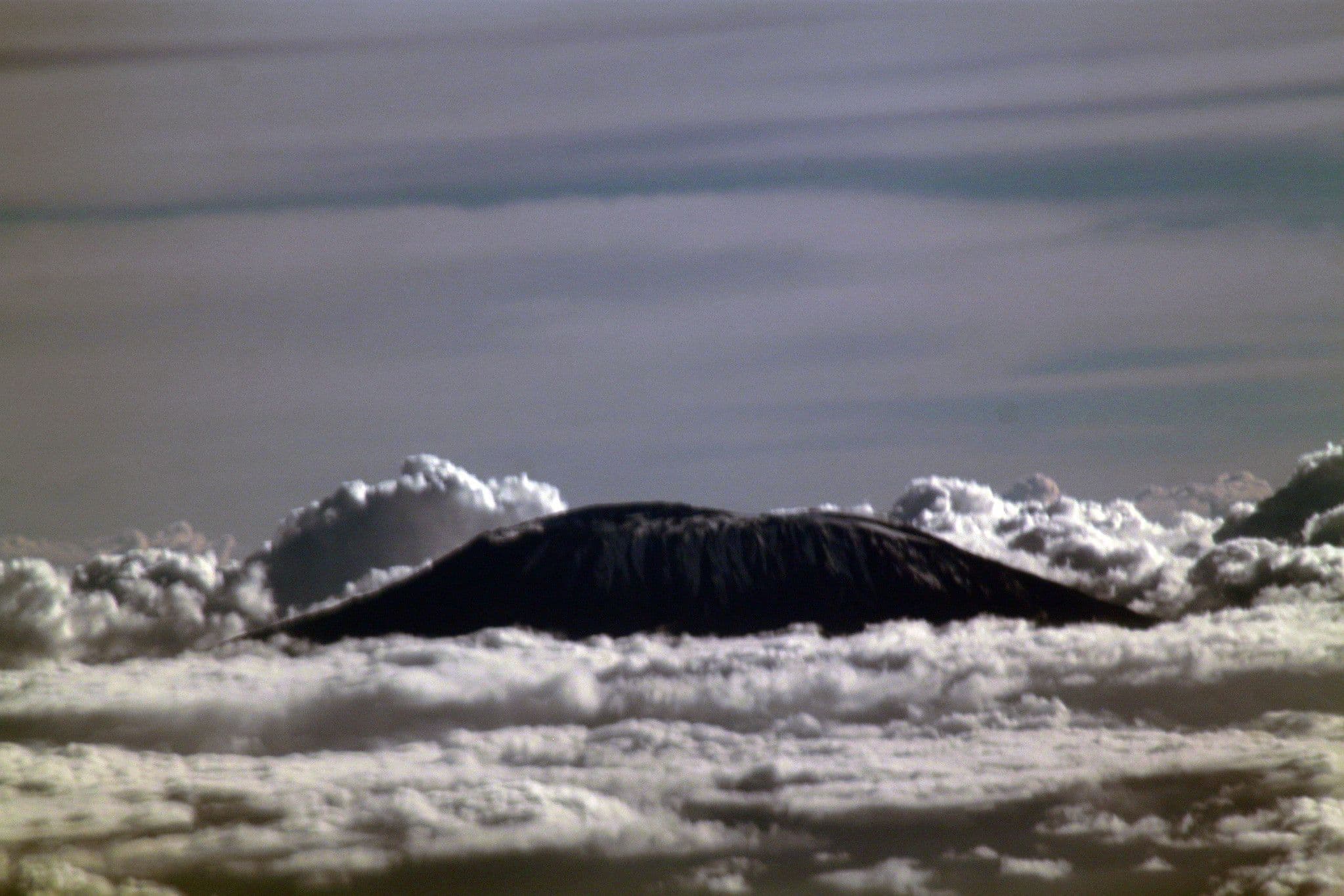
The Northern Circuit circles almost the entire mountain before pushing to Uhuru Peak at 5,895 m — giving your body time to acclimatise and your eyes time to take in landscapes that shorter routes never reach. Over nine days you move through rainforest, moorland, alpine desert, and arctic glacier, guided by a team that has stood on this summit hundreds of times and still watches the horizon at dawn.

Highlights

What you'll experience

  • The Northern Circuit's long acclimatisation profile gives climbers more time to adjust, and our guides track each guest's oxygen saturation and pulse every evening at camp. The result is one of the strongest summit rates of any Kilimanjaro route.

  • Most trekkers never see Kilimanjaro's northern face — a wide, silent plateau where the mountain belongs only to you. On days four and five you walk for hours without meeting another group, the glaciers of the Credner Icefield catching afternoon light above you.

  • Colobus monkeys crash through fig trees on day one. By day eight you are crossing a snowfield in the dark, headtorch picking out footprints in the ice. The transition through every ecological zone on the planet, compressed into nine days, is the real spectacle.

  • For those who want a summit experience few people ever have, Crater Camp sits inside Kilimanjaro's ancient caldera at 5,730 m. Spend a night above the clouds and watch the sun rise from inside the rim before the final push to Uhuru.

  • Our lead guides — including senior guide Baraka Mollel, who has summited over 300 times — brief you each evening on the next day's terrain, weather windows, and what to expect from your body at altitude.

Why choose us

Why choose a Small Group Journey?

The Northern Circuit is already Kilimanjaro's most thorough route. We make it the most supported.

Small Groups, Better Odds

A maximum of eight climbers means our guides know every guest's condition, pace, and limits. Decisions — to push, to rest, to turn around — are made with full information, not in a crowd.

Daily Health Monitoring

Pulse oximetry and resting heart rate are recorded every evening at camp. Our guides carry supplemental oxygen and are trained in wilderness first aid. The data guides pacing decisions before symptoms appear.

Guides Who Live the Mountain

Our lead guides are Tanzanian, drawn from the communities around Kilimanjaro. Baraka Mollel and his team know this mountain in rain, mist, and perfect blue-sky calm — and they share that knowledge freely.

Itinerary

your day-by-day journey

Day 1Moshi to Londorossi Gate — Into the Rainforest

After a morning briefing in Moshi, the team drives two hours west to Londorossi Gate (2,100 m), where porters divide loads with the quiet efficiency of people who have done this a thousand times. The first hour on trail is a shock of green — giant Hagenia trees draped in old-man's-beard lichen, trumpeter hornbills calling somewhere overhead, the air thick with moisture.

You gain altitude slowly, climbing through forest to Mti Mkubwa camp (2,650 m), where cooks have already set up the mess tent and hot water arrives within minutes of your boots coming off.

Lunch, Dinner

Day 2Mti Mkubwa to Shira 1 Camp

The forest thins as you climb, replaced by giant heather and then open moorland. The Shira Plateau appears ahead like a raised table — flat, windswept, and vast. By early afternoon you walk onto the plateau proper and begin to understand why this route is different: the scale here is panoramic, Kilimanjaro's summit cone visible to the east, the plains of Tanzania dropping away to the west.

Shira 1 camp sits at 3,500 m. Tonight you may feel the first suggestion of altitude — a mild headache, slightly slower sleep. Drink water steadily and eat everything on your plate.

Breakfast, Lunch, Dinner

Day 3Shira Plateau — Acclimatisation Day with Lava Tower

Today's walk crosses the heart of the Shira Plateau to Shira 2 camp, with an optional acclimatisation detour up to Lava Tower (4,630 m) before descending to sleep lower. This classic 'climb high, sleep low' principle is central to the Northern Circuit's success rate — your red blood cell count rises during the high point, and you recover overnight at the lower camp.

The plateau in afternoon light turns rust and gold, the volcanic soil catching the low sun. White-necked ravens patrol the camp perimeter for scraps.

Breakfast, Lunch, Dinner

Day 4Heading North — Into Lone Territory

This is where the Northern Circuit earns its name. Instead of turning south toward the popular Barranco Wall, you swing north and the landscape opens into something most Kilimanjaro climbers never see. The trail is quieter here, the mountain's northern face free of crowds, the views stretching toward Kenya on clear days.

You traverse across open alpine desert — sparse tussock grass, exposed volcanic rock, the occasional patch of everlasting flowers (Helichrysum species) clinging to sheltered depressions. Camp at Moir Hut (4,200 m) feels earned.

Breakfast, Lunch, Dinner

Day 5Traversing the Northern Face to Third Cave

The northern face delivers its most dramatic walking today — a long traverse across lava fields with the Credner and Drygalski glaciers glittering above, remnants of ice that have been retreating for a century and still command silence when you look up at them. The trail requires steady footing on loose scree in sections; trekking poles earn their weight.

Third Cave camp (3,870 m) offers a slight descent from yesterday's altitude, another deliberate acclimatisation step. Baraka checks oxygen readings after dinner; the numbers tell a story you can read in your own lungs — easier breathing than two days ago.

Breakfast, Lunch, Dinner

Day 6School Hut Camp — The Summit in Sight

The route curves back toward the southern and eastern approach, climbing steadily through the Saddle — a broad, windswept ridge between Kilimanjaro's main peak and the subsidiary summit of Mawenzi, whose jagged towers are visible to the east. The altitude here (4,300–4,750 m) is noticeable: conversation slows, each step is deliberate.

School Hut camp (4,750 m) is where you first feel the summit is a real thing rather than an idea. The crater rim is visible. Dinner is early; the wake-up call comes at midnight.

Breakfast, Lunch, Dinner

Day 7Summit Night — Uhuru Peak at Dawn

Midnight. The headtorch beam picks out the boots of the person ahead. The temperature is well below zero; every breath is visible, and the thin air makes each step feel like two. The trail switchbacks up Kilimanjaro's volcanic cone in darkness, the lights of Moshi far below and the Milky Way — at this altitude, without light pollution — overhead in a way that makes you stop and look up despite the cold.

Stellar Crater rim (Gillman's Point, 5,685 m) arrives as dawn begins in the east, orange leaking into deep blue. Uhuru Peak (5,895 m) is another 45 minutes along the rim. The glacier walls catch the first light. Most people cry. Baraka smiles — he has seen it 300 times and still smiles.

Descent is long but the legs find energy from somewhere. You sleep that night at Mweka camp (3,100 m), back in the forest zone.

Breakfast, Lunch, Dinner

Day 8Mweka Camp to Mweka Gate — Final Forest Walk

The last morning on the mountain. Colobus monkeys are back in the canopy — black-and-white shapes dropping between branches — and the air smells of wet earth and flowers after weeks of dust and ice. The descent through Mweka forest is fast and easy on legs that have been through an ordeal and are already celebrating.

At Mweka Gate your certificate is signed and handed over. Porters receive their tips in a circle of handshakes and laughter. The bus back to Moshi takes an hour; the hot shower at the hotel takes considerably longer.

Breakfast, Lunch

Day 9Moshi — Debrief, Recovery, Departure

A late breakfast, sore legs, and a morning with no altitude to gain. The team gathers for a debrief over coffee — what worked, what surprised you, what you'll tell people when you get home. Guides are available to answer questions about the mountain's ecology, geology, and future.

Transfers to Kilimanjaro International Airport (JRO) are arranged throughout the day to suit individual flight times.

Breakfast

Extensions

+3 Days

Zanzibar Beach Recovery

Three days on Zanzibar's Stone Town and the north coast give legs time to recover and lungs time to remember sea-level air. We arrange the ferry or short flight from Dar es Salaam.

View Details
No image
+4 Days

Serengeti Wildlife Safari

Four days in the Serengeti, departing from Arusha, pair the mountain with the plains. Depending on the month, you may catch the wildebeest migration's river crossings or the calving season on the southern grasslands.

View Details
No image

Dates & Prices

Prices in USD, including internal air, per person, double occupancy.

  • Jun 15 – Jun 23
    $3,950Available
  • Jul 13 – Jul 21
    $3,950Available
  • Aug 10 – Aug 18
    $3,950Available
  • Sep 7 – Sep 15
    $3,950Available

Minimum Age

12 years (with demonstrated fitness and parental consent)

Safari Duffel

Porters carry a maximum of 15 kg per climber duffel. You carry a daypack (water, layers, camera, snacks) of 5–7 kg.

First Group Event

Mandatory kit check and briefing at the Moshi hotel at 18:00 on the evening before Day 1

Last Group Event

Drop-off at Kilimanjaro International Airport (JRO) on Day 9

Guaranteed Departures

All listed departures are guaranteed with a minimum of two confirmed climbers.

Alternate Sightseeing

In the event of route closures due to extreme weather, we reserve the right to adjust daily stages. Summit attempts are weather-dependent; refunds are not available for weather-related turnarounds but a partial credit is offered toward a future departure.

Stay Connected

Join Our Journey

Get weekly travel stories, photo essays, and expedition updates delivered straight to your inbox.

No spam, unsubscribe anytime