

Uganda · Western Uganda
Queen Elizabeth National Park
The Kazinga Channel, the Ishasha tree-climbing lions, and crater lakes under the Rwenzori snowline.
The place
About Queen Elizabeth National Park
- Country
- Uganda
- Region
- Western Uganda
- Park area
- 1,978 km²
Where the Rift Holds Its Breath
Stand at the Mweya Peninsula at dusk and you can see three things at once: the blue-grey sheet of Lake Edward stretching toward the Democratic Republic of Congo, a pod of hippos rearranging themselves in the shallows below the escarpment, and a tawny shape — almost certainly a Uganda kob — moving through the short grass behind you. Queen Elizabeth National Park does not ask you to choose. It layers savannah, forest, wetland, and volcanic crater into a single, unhurried view.
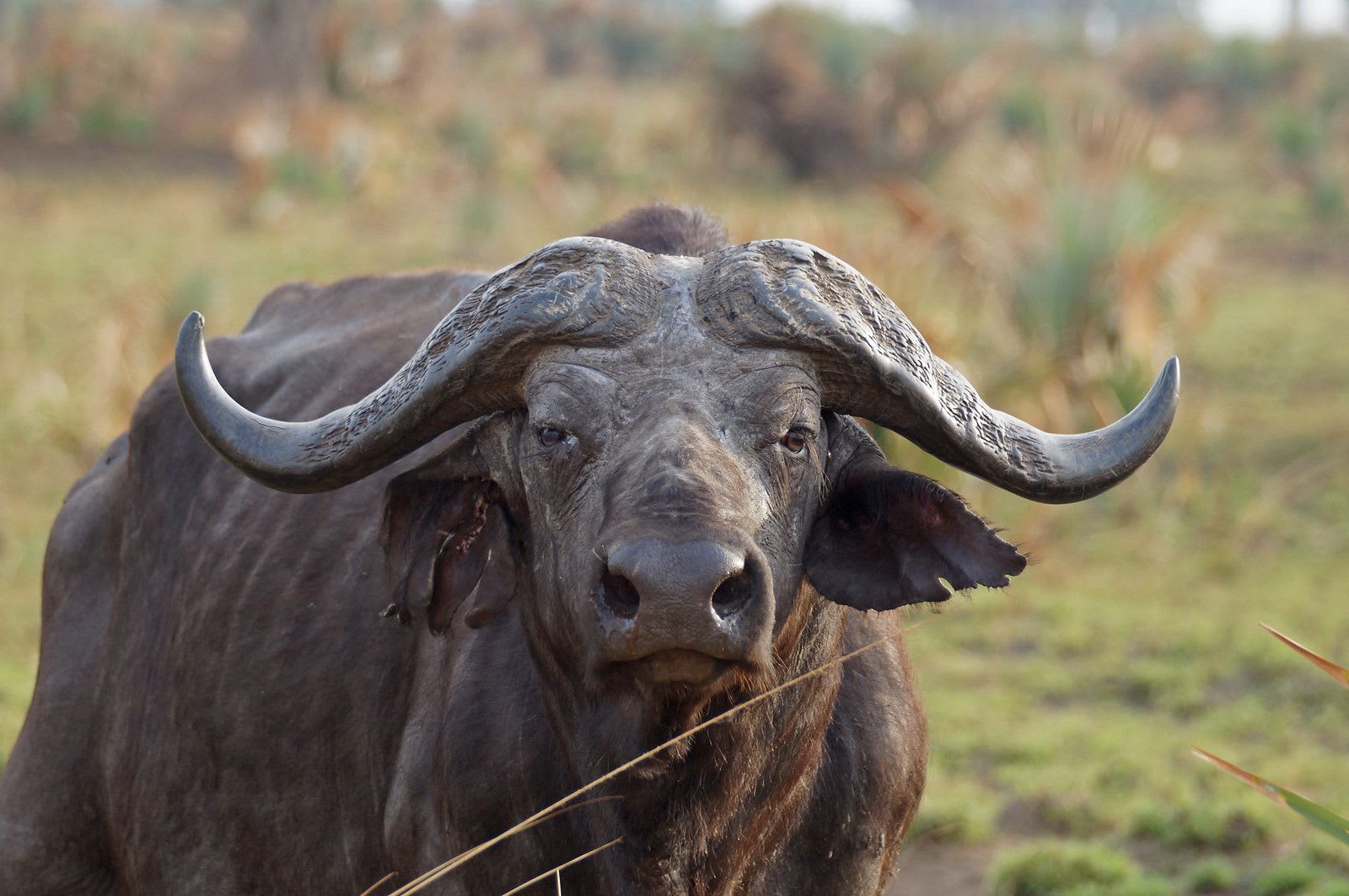
The Kazinga Channel is the park's connective tissue — a 40-kilometre natural waterway linking Lake George to Lake Edward. A boat trip along it in the late afternoon puts you within metres of Nile crocodiles warming on sandbanks, African skimmers threading low over the surface, and buffalo so numerous they crowd the bank like dark boulders come to life. Pied kingfishers hover and drop. Great white pelicans drift in formation. Few stretches of water on the continent reward quiet attention quite like this one.
The Tree-Climbing Lions of Ishasha
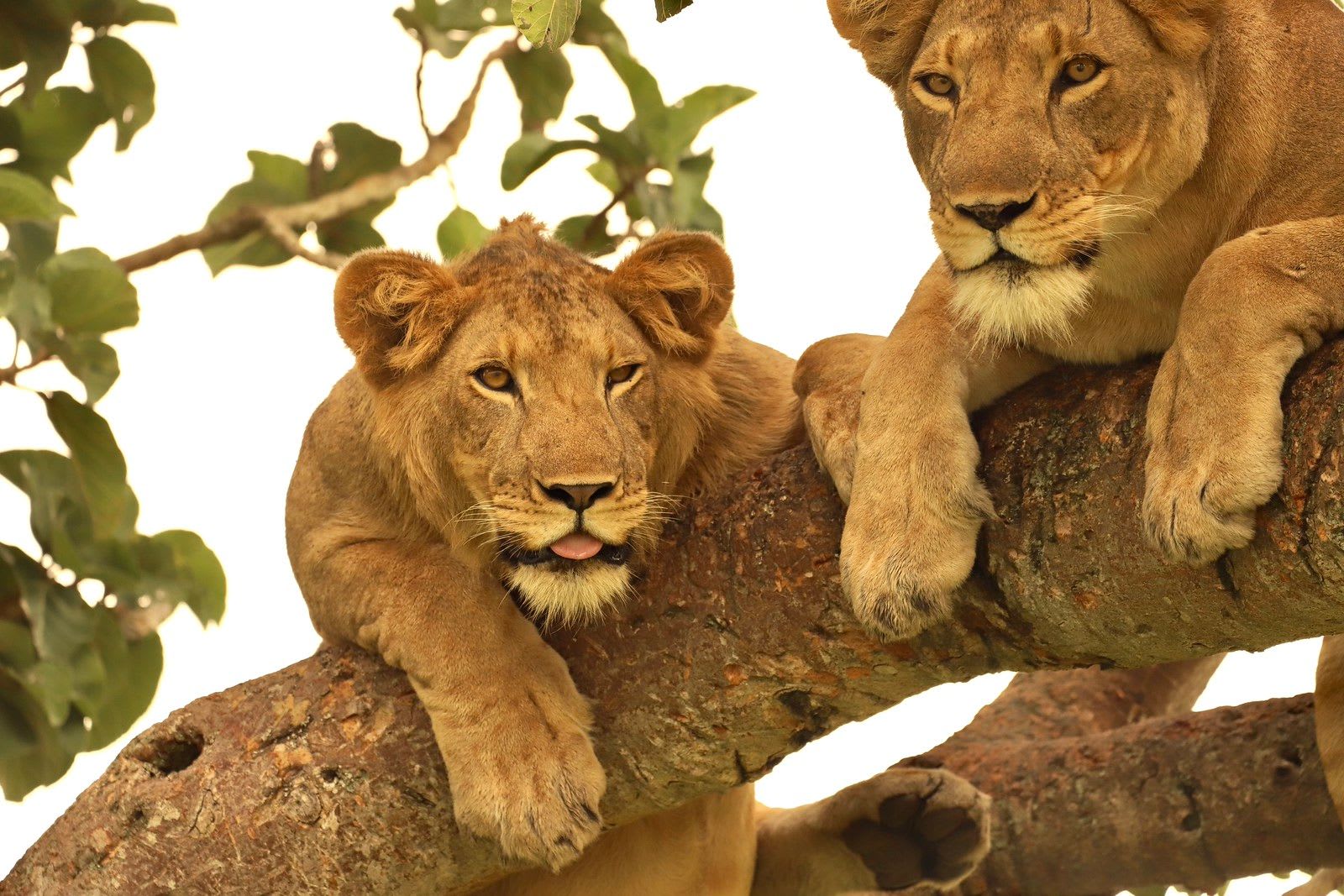
The park's southern sector, Ishasha, carries one of East Africa's more improbable spectacles: lions that routinely climb fig trees. Nobody has settled on a single reason — shade from tsetse flies, a better vantage point over the kob herds below, or simply habit passed from one generation to the next. Whatever the cause, finding a pride sprawled across the broad horizontal branches of a Ficus natalensis, tails dangling, is one of those sights that takes a moment to fully believe. Ishasha sits apart from the main park, separated by several hours of rough road, and that distance keeps visitor numbers low.
Craters, Chimps, and Kyambura
The Kyambura Gorge cuts through the eastern edge of the park like a crack left by something enormous. Down inside it, a small and intensely studied community of chimpanzees moves through riverine forest — a green corridor so narrow and defined that tracking them feels more intimate than almost anywhere else in Uganda. Above the gorge, the open savannah continues as if nothing unusual lies beneath it.
To the north, the Maramagambo Forest and the Katwe crater lakes add further texture. The craters — some holding salt, some fresh water, some an improbable turquoise — are best seen on foot at dawn, before the heat flattens the light. Flamingos occasionally work the saline edges. The smell of sulphur drifts in from Katwe. It is a strange, quietly volcanic corner of a park that consistently surprises people who expected only open grassland.
Safaris here
Safaris that visit Queen Elizabeth National Park

2 Days Queen Elizabeth National Park Safari
2 days · Small Group · Limited to 6 guests
Itinerary
Queen Elizabeth National Park

3 Days Queen Elizabeth National Park Safari
3 days · Private · Limited to 6 guests
Itinerary
Queen Elizabeth National Park
4 Days Uganda Wildlife in Queen Elizabeth National Park
4 days · Private · Limited to 6 guests
Itinerary
Queen Elizabeth National Park

5 Days Budget Uganda Wildlife Safari – Lake Mburo & Queen Elizabeth National Park
5 days · Small Group · Limited to 8 guests
Itinerary
Queen Elizabeth National Park
5 Days in Queen Elizabeth and Bwindi
5 days · Private · Limited to 6 guests
Itinerary
Queen Elizabeth National Park · Bwindi Impenetrable Forest

5 Days Uganda Gorilla Trekking & Queen Elizabeth Wildlife Safari
5 days · Private · Limited to 6 guests
Itinerary
Bwindi Impenetrable Forest · Queen Elizabeth National Park