The River Doesn't Care About Your Itinerary
Samuel Rotich cuts the engine and the Land Cruiser settles into silence. Downstream, the Mara runs copper-brown, swollen from rains that fell somewhere you'll never see. On the far bank, a line of wildebeest stretches back into the grass until it dissolves into heat shimmer — forty thousand animals, maybe more, all pressing forward and yet going nowhere.
"They've been standing there since before you woke up," Samuel says, not unkindly. He pours tea from a thermos and hands it across.
The Great Migration is not a single event. It is twelve months of continuous movement — roughly two million wildebeest, plus zebra and Thomson's gazelle, rotating through the Serengeti-Mara ecosystem in search of short green grass. The Mara River crossings, which happen between July and October depending on rainfall and the inscrutable mood of the herd, are the chapter most people want to witness. What surprises visitors is how long the story takes to get there.
The Moment Breaks Without Warning
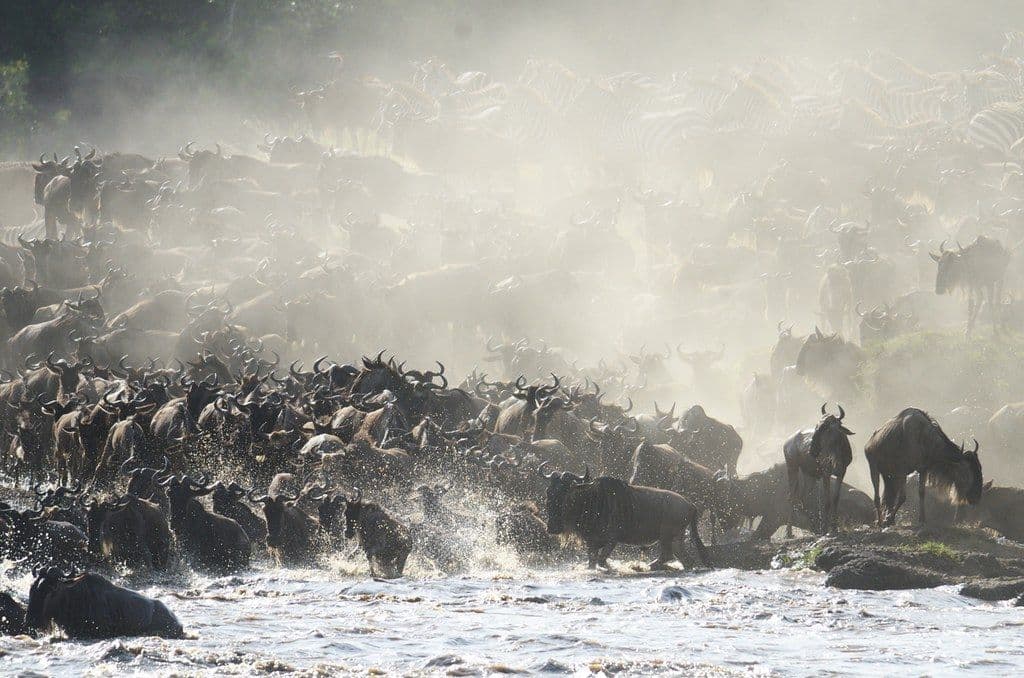
An hour passes. A yellow-billed stork wades the shallows. Then one animal steps to the edge — always one first, never the obvious candidate — and the whole herd pours over the bank like a decision made by gravity. The sound reaches you a half-second late: hooves on rock, the wet slap of bodies entering fast water, a low communal moan that has no English word.
Nile crocodiles, motionless until now, pivot with unsettling precision. They are not hunting so much as harvesting — opportunists in a system that has run this way for longer than any conservation boundary has existed.
Within four minutes it can be over. The survivors climb the far bank and immediately start grazing, as though nothing happened. The crocodiles settle back onto the sand.
Why Private Access Changes Everything
Most crossing viewpoints see a dozen vehicles or more, radios crackling with coordinates. Arrive Africa's Mara itineraries position guests at quieter secondary crossings — spots Samuel has watched for eleven seasons — where the bank is wide enough for one vehicle and the angle keeps the morning light behind you.
"Photography is better," he admits, "but it's not the reason I bring people here. It's quieter. You can hear the animals."
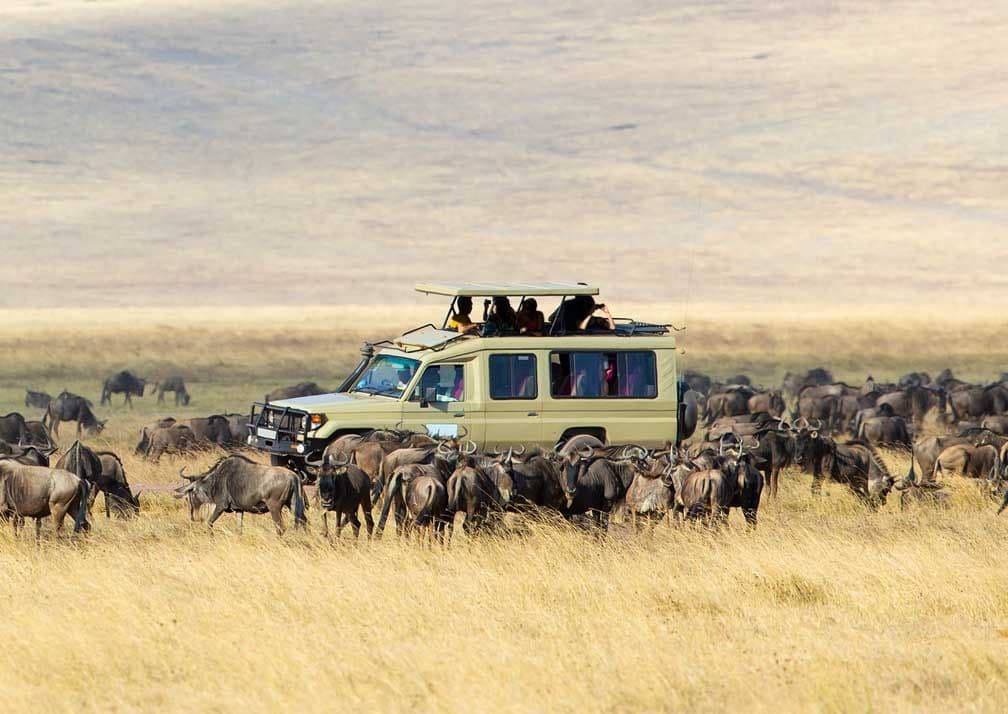
Wilderbeest in a grassland in Masai Mara
Arrive Africa Safaris
Staying at Olonana
Olonana Tented Camp sits above the river on a bend where hippos surface at dusk and the camp lights draw moths the size of your palm. The tents are large enough to move around in, the staff remember how you take your coffee by the second morning, and the kitchen will pack a pre-dawn box if you want to reach the crossing before the light hardens.
The camp is an hour's drive from the main crossing points — close enough to respond when Samuel's network reports movement, far enough from the convoy routes to feel like a different country.
Practical Notes for the Crossing Season
- Best window: Late July through mid-October for Mara River crossings; the exact peak shifts year to year.
- Morning game drives leave at first light — 06:00 — when the herds are most active and temperatures are bearable.
- Children on safari: Kids above eight years engage well with the migration story; Samuel carries a laminated map of the annual route that becomes a prized souvenir.
- Book at least eight months ahead for the July–September peak.
"The wildebeest don't perform. They just live. Our job is to get out of the way and let you watch that." — Samuel Rotich, lead guide